

In conversation with Director Rodula Gaitanou
To someone who has never been to an opera before, what do they need to know to enjoy Roméo et Juliette?
Nothing. I don’t believe anyone needs to come prepared to the opera. The idea that you need special knowledge to enjoy it has made too many people unnecessarily apprehensive.
Opera is, above all, an art of emotions. You come with an open heart and allow yourself to surrender to it. Music, voices, theatre, bodies, light, colour : it is a feast for the senses.
And Roméo et Juliette is perhaps the perfect first opera because you already know everything you need to know: two young people fall desperately in love, and the world around them makes that love impossible.
So my invitation is very simple: come as you are. Don’t worry about what you know or don’t know. Sit down, open your senses, and let us take you somewhere. The rest you can simply feel.
Many composers have turned a Shakespeare play into an opera, Giuseppe Verdi (Otello, Macbeth, Falstaff) Benjamin Britten (A Midsummer Night’s Dream) Brett Dean (Hamlet) Where does Gounod’s Roméo et Juliette fit in?
I think what is fascinating about Gounod’s Roméo et Juliette is that he doesn’t really try to compete with Shakespeare. He does something quite different. He takes this enormous, incredibly rich play and brings the lens very close to these two young people.
Shakespeare gives us an entire society: the families, the violence, the politics, the generational conflict, the extraordinary gallery of characters around Romeo and Juliet. Gounod and his librettists, Barbier and Carré, strip a great deal of that away and put the love story absolutely at the centre. In fact, the architecture of the opera is almost built around the successive encounters between Romeo and Juliet. There are four great duets in which we watch their relationship change from fascination, to desire, to intimacy, separation and finally death.
And perhaps that is where Gounod sits differently from Verdi, Britten or Brett Dean. Verdi is fascinated by Shakespeare’s theatre, its psychology, its darkness, its political world, the grotesque sitting alongside the sublime. Britten and Dean, in very different ways, also engage with the complexity and strangeness of Shakespeare’s theatrical language. Gounod is much more interested in distilling Shakespeare. He finds the emotional essence of this particular story and allows music to take over where language can no longer go.
For me, that is the great strength of the opera. The music creates a private space for Romeo and Juliet inside this very public and very violent world. Every time they are together, time seems somehow to change. The outside world recedes. And then, inevitably, it comes crashing back in.
There is also something wonderfully operatic about the liberty Gounod takes at the very end. Juliet wakes while Romeo is still alive, so unlike Shakespeare they are given one final moment together. It isn’t faithful to Shakespeare literally, but emotionally it makes complete sense for Gounod: this is an opera that has been constructed around two voices finding one another, so it has to end with those two voices together.
So I would say Gounod’s Roméo et Juliette is perhaps less an operatic translation of Shakespeare rather than a distillation of him. Shakespeare gives us the tragedy of Verona; Gounod gives us the tragedy of two people who, for a very brief moment, manage to create a world of their own and discover that the world around them will not allow it to survive.
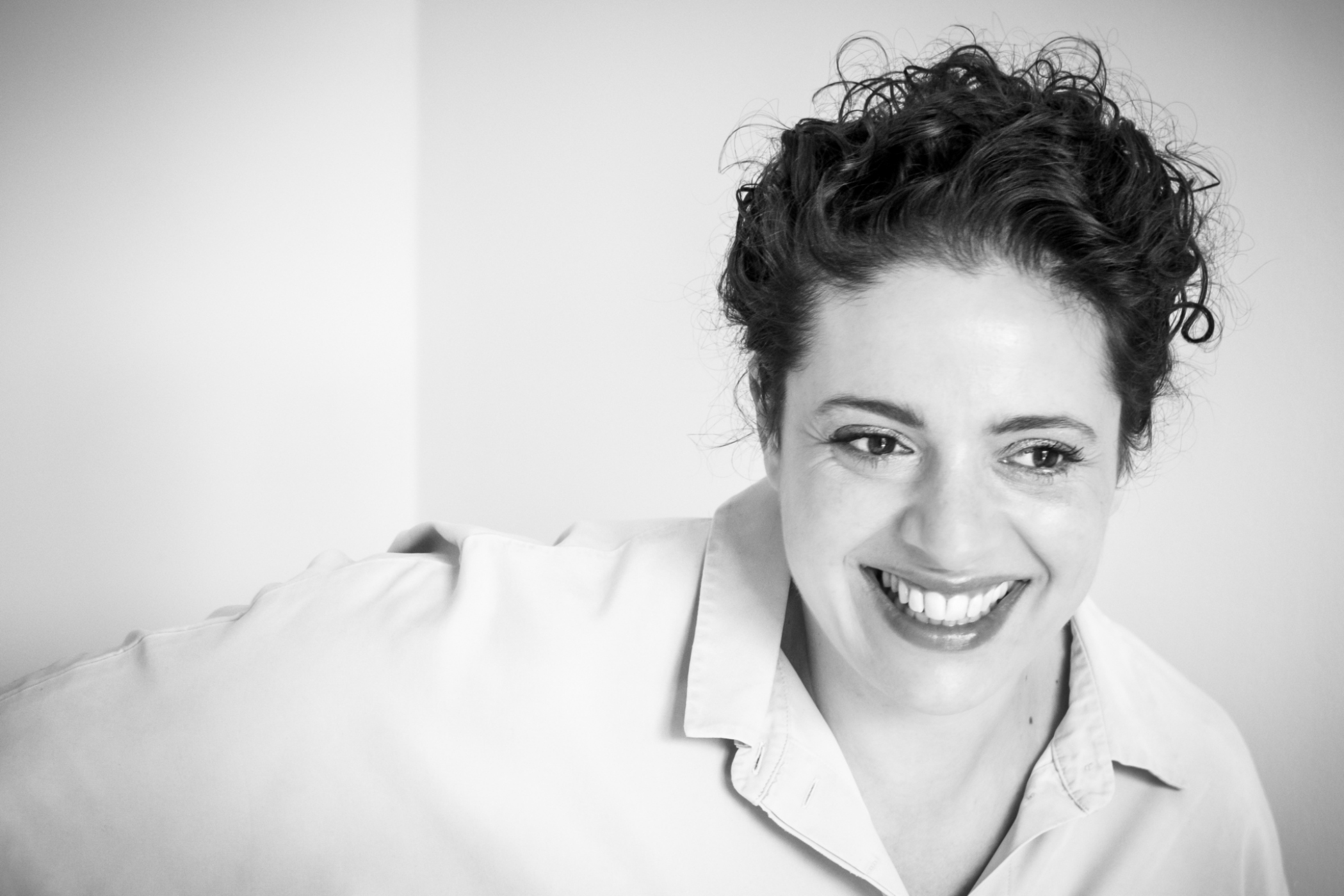
You have close working relationship with designer, takis – how do you approach a new project together?
takis and I have been working together for a long time, so we’ve built a common aesthetic vocabulary and know each other extremely well. We start very instinctively throwing ideas, images, music, paintings, films, completely unexpected references at each other. It can become a kind of battle of ideas, and the best ones survive.
At the beginning we’re not trying to design the production. We’re trying to catch its atmosphere, its temperature, its smell almost. We use a lot of metaphors, because sometimes an apparently unrelated image unlocks the whole piece.
Gradually, through all that conversation and collision, things fall away and something very simple begins to emerge. We’re always looking for an abstraction of the essence rather than decoration, the one idea that can contain the whole world of the piece.
After so many years we communicate on many levels. We challenge each other, we make each other laugh, we disagree, we change our minds. There is enormous trust, but never complacency. That friction is an important part of the creativity.
You lead a busy life as an international opera director, just arrived in Perth from Italy following a successful opening of Britten’s opera Death in Venice. What are your techniques to transition from one opera world to another, different casts, creative teams, locations and time zones?
I think the secret is that wherever I am, I am completely there. Opera demands that kind of presence. You enter a new piece, a new city, a new rehearsal room and a new group of people, and very quickly they become your world. I love that intensity. Every project is an introduction to a new artistic family, and I feel enormously lucky that this is how I spend my life.
I don’t really have a technique for transitioning, but this strange, busy life does require a strong compass. Emotionally, that is my family back home. And on the road, it’s often the little rituals that keep me grounded. I always travel with my folding bike. It allows me to discover a city in a way no other transport does, and it gets me to rehearsal through the power of my own legs, which somehow gives me a sense of independence and continuity wherever I am.
I’m also very lucky to work repeatedly with a trusted group of creative collaborators. We’re a bit of a gang, and having those familiar relationships as you move from country to country makes a huge difference.
Back-to-back productions can certainly be disorientating, particularly when you move directly from one world into another without going home in between. But the work itself resets me. I’m a people person and I thrive on the exchange of energy in a rehearsal room. The moment I meet a new cast and we start making something together, I’m there.
And jet lag? You just get on with it. The less attention you give it, the better!
So many operas embrace tragedy. Equal to the story of the Titanic, Romeo and Juliette has a famously well-known ending. How do you navigate the narrative of this love story when everyone ‘knows how it ends’?
That’s true of so much of the operatic repertoire. We often know exactly how it ends and, spoiler alert, in most cases there is a death!
But for me, suspense doesn’t necessarily come from not knowing what happens. It comes from not knowing how it will happen. That is where storytelling begins. Where do you guide the audience’s attention? What details do you reveal? What choices do the performers make? How do you create relationships that feel so truthful that, for a few hours, we forget that we already know their fate?
That is also the extraordinary thing about live performance. We may know the story, but this particular Romeo and this particular Juliet have never met before, in this room, with this conductor and this audience. My job is to create the conditions for the performers to be at their most alive, so the audience experiences the story as something happening now rather than something already written.
That is the beautiful cruelty of tragedy: we know they are going to die, and still we spend the whole evening willing them to live.
What are your feelings about the enduring power of opera as an art form? What can opera offer that no other story-telling can?
For me, opera is above all an art form of emotions. It can certainly be a world of ideas, but its unique power is that it reaches you somewhere before the intellect. A human voice, unamplified, carried by an orchestra through a theatre can have an almost physical effect: the goosebumps up your spine, the sudden intake of breath, that extraordinary sense of elation that comes from being profoundly moved.
There is something almost overwhelming about the scale of expression opera allows. It can articulate feelings that would seem excessive or impossible in spoken language and somehow make them completely truthful.
And, crucially, it is live. A singer takes a breath in front of you and turns it into sound, and hundreds or thousands of people experience that vibration together. It exists in that moment and then it is gone. No screen can quite reproduce that exchange of energy.
That, for me, is opera’s enduring power: it doesn’t just tell you what somebody feels. It makes you feel it too.